Sellers in age-restricted communities are frequently surprised by how long a resale takes, and the explanation is usually simple arithmetic that nobody walked them through when they bought.
An age restriction is not a preference or a marketing angle. It is an enforced occupancy rule, and it means a large share of the people who would otherwise be qualified, approvable buyers for your home are not eligible to live in it. That has consequences for time on market and for price. It also has real advantages, which are worth naming honestly rather than pretending the tradeoff runs only one way.
How age restriction actually works
Under federal fair housing law, housing discrimination on the basis of familial status is generally prohibited. Communities that restrict by age operate under a specific statutory exemption, and the exemption has conditions attached. The two common forms:
The 62 and older form. Every occupied unit is occupied solely by persons 62 or older. This is the stricter version and it is less common in manufactured housing.
The 55 or older form. At least 80 percent of occupied units must have at least one occupant who is 55 or older. The community must publish and adhere to policies and procedures demonstrating intent to operate as housing for older persons, and it must verify occupant ages through reliable surveys and documentation, updated periodically.
That 80 percent figure is the one most people get wrong. It does not mean 20 percent of homes are open to anyone. It means the community has a small amount of headroom, and the community itself decides how to use it. Most communities operate well above the minimum precisely so they never risk losing the exemption, and many simply enforce the restriction on every home. Assuming you fall into the flexible 20 percent is a bad plan.
Beyond the federal floor, communities commonly layer on their own rules: minimum ages for a second occupant, limits on how long a younger family member or grandchild can stay as a guest, and rules about who may inherit and occupy. Those rules live in the community documents, not in federal law, and they vary community to community.
What it does to demand
Think about who can buy your home in an all-ages community: essentially any adult who can pass tenancy screening. First-time buyers, working families, single parents, downsizing retirees, investors who intend to rent it out if the community permits rentals.
Now apply a 55+ restriction. Everything under 55 is gone. Families with school-age children are gone. In most communities, investors buying to rent to a general tenant pool are gone or heavily restricted.
What remains is retirees and near-retirees, which is a real and motivated group, but a much narrower one. And that group has particular characteristics that affect your sale:
They are often paying cash or using limited financing. Which is good for certainty and bad for price ceiling, because a cash buyer is price sensitive in a way a financed buyer is not.
They are rarely in a hurry. Retirement moves are planned, seasonal, and frequently contingent on selling something else. That stretches your timeline.
They are comparison shoppers. They will look at every available home in every age-restricted community within a wide radius, and they will notice condition differences that a younger buyer might overlook.
They are highly sensitive to ongoing cost. Lot rent level, utility setup, and the likelihood of future increases matter more to a fixed-income buyer than to a working one, and they will ask.
Where the restriction helps you
It would be dishonest to present this as purely a penalty.
Condition standards are usually higher across the community, which supports value for everyone in it. Age-restricted communities tend to enforce exterior rules more consistently, and the overall presentation of the community is part of what a buyer is paying for.
Turnover is lower and tenure is longer, which some buyers specifically want.
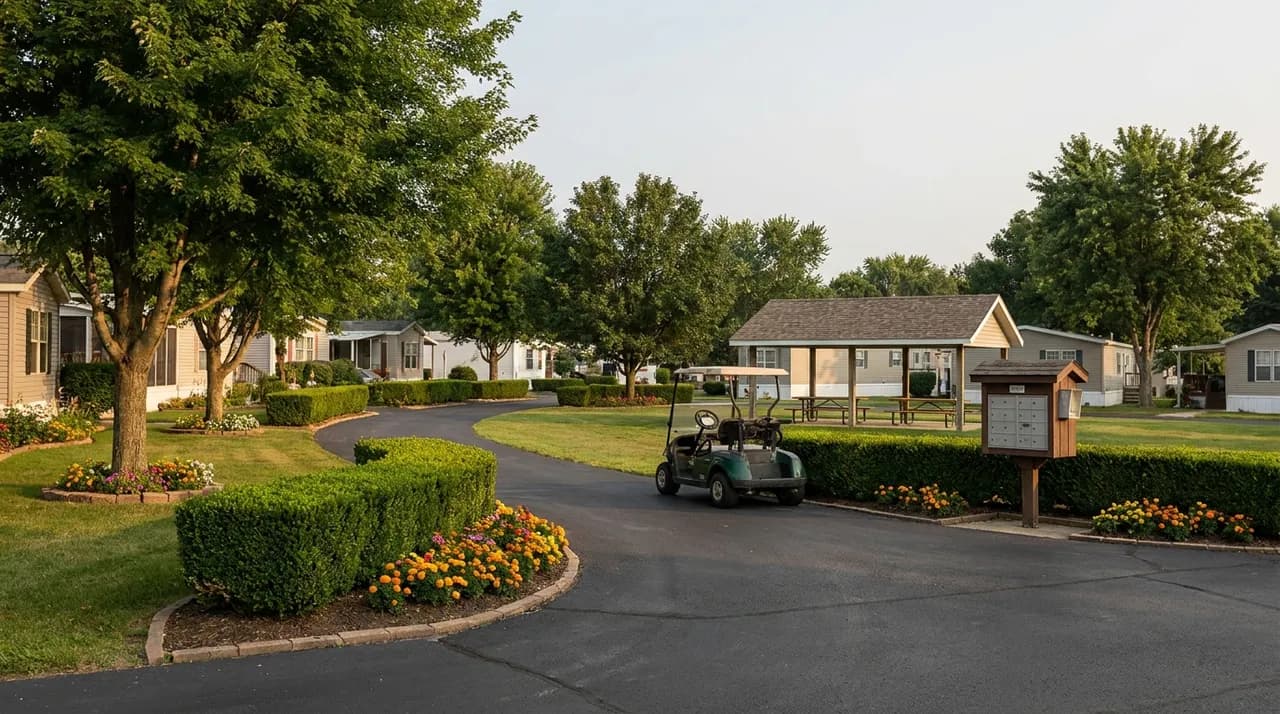
The amenity and social package is often the product. Where a community has a clubhouse, activities, and an established resident culture, that is a genuine draw and a reason a buyer chooses your community over a cheaper all-ages one nearby.
Your competition is also restricted. Fewer eligible buyers, but also fewer competing homes chasing them, because the pool of homes in that specific category is limited too.
The net effect in most markets is a slower sale at a price that is not necessarily lower, provided the home shows well. The homes that suffer most in age-restricted communities are the ones in visibly rough condition, because the buyer pool there has both the time and the alternatives to skip them.
Practical implications for pricing and timing
Expect a longer marketing period, and budget for it. The carrying cost during that period is lot rent, utilities and insurance, and it runs every month whether or not anyone has looked at the home. That carrying cost is a real part of your net and it is the number most sellers leave out of the comparison when they are deciding between listing and taking an offer.
Seasonality is more pronounced. In markets that attract retirees seasonally, demand concentrates in particular months. Listing against the season can add months of carrying cost for no gain.
Condition matters more, not less. With a slower and more selective pool, the things that make a home hard to sell hurt you more than they would in an all-ages community with a broader audience.
Verify the community's specific rules before you market. Get the community's written age policy, the occupancy rules, and the guest policy. A buyer whose adult child intends to live with them, or who has a grandchild in their care, needs to know before they apply, not after.
The inheritance wrinkle
Age-restricted communities create a specific problem for heirs. An adult child who inherits a home in a 55+ community and is 48 years old generally cannot move into it. They can usually sell it, but they are selling into the same restricted buyer pool, from a distance, while lot rent accrues. If you are planning your estate and your home is in an age-restricted community, it is worth telling your heirs that in advance so it is not a discovery.
The honest summary
If your home is in an age-restricted community, in good condition, in a community people actively want to live in, and you are not in a hurry, listing it is very likely the right call and will probably beat any cash offer you receive. Say so, price it realistically, and be patient.
If the home needs work, if you are carrying lot rent you cannot comfortably absorb for several months, or if you are managing the sale from another state, the calculation changes, because the restricted buyer pool means the marketing period is long and the carrying cost is the thing eating your proceeds.
We buy manufactured homes in both age-restricted and all-ages communities, and we resell matched homes to buyers looking for them. If you want a candid read on which path fits your situation, send us the details of your home. If you are on the other side of this and looking for a home in a community like yours, see what we currently have available.
Federal fair housing law sets the baseline for age-restricted housing, but states add their own requirements, and individual communities set their own stricter occupancy and guest policies on top of both. This is general information, not legal advice. Consult your community's governing documents and a licensed attorney for your specific circumstances.
Sources: 24 CFR Part 100, Subpart E, Housing for Older Persons; U.S. Department of Housing and Urban Development